In this article, we’ll break down why paint matching is more complicated than most people realize and what separates high-quality paint work from repairs that miss the mark.
Most drivers assume a body shop can look up a paint code, spray the damaged area, and perfectly match the color in a few hours. In reality, automotive paint matching is one of the most difficult parts of collision repair.
Even vehicles with the exact same factory paint code can look completely different once age, sunlight, weather, and wear come into play. That’s why quality paint work takes more than mixing paint and spraying a panel. It takes experience, testing, blending, and attention to detail.
At Adesa Auto Body, we regularly help drivers in Boise and throughout the Treasure Valley understand why proper car paint matching matters, especially after an accident or auto paint repair. A poor paint match might not stand out immediately under shop lighting, but it often becomes obvious in direct sunlight or after a few months on the road.
Automotive paint matching is affected by several factors, including:
- Factory paint variations
- Sun exposure and paint fading
- Idaho weather and environmental wear
- Modern multi-stage paint systems
- Spray technique and paint blending
Learn more about car paint maintenance in our blog post: “Car Paint Maintenance 101”.
Why Factory Car Paint Codes Are Only the Starting Point
Every vehicle leaves the factory with a paint code that identifies its original color formula. Most drivers assume this guarantees an exact match during repairs. It doesn’t.
A paint code is only a starting reference. Automakers often produce the same color across different factories, production years, and manufacturing batches. Even though the code is technically the same, small differences in materials and application methods can slightly change the final appearance.
That means two vehicles with the same paint code may already look different before either one has ever been repaired.
Once a vehicle spends years in the sun, rain, snow, and road conditions around Boise, those differences become even more noticeable.
This is why experienced paint technicians never rely on the paint code alone. They evaluate how the vehicle’s paint looks today, not how it was expected to look when it rolled off the assembly line.
Why Car Paint Changes Over Time
Automotive paint constantly changes as it ages. Most drivers do not notice the gradual fading because it happens slowly over time.
UV exposure from sunlight is one of the biggest causes of paint fading. In Idaho, strong summer sun and high UV exposure can dull paint surprisingly fast, especially on vehicles parked outdoors year-round.
Environmental conditions that affect paint include:
- UV rays and oxidation
- Winter road chemicals and salt
- Hard water spotting
- Temperature swings
- Dirt, debris, and environmental fallout
Darker colors often lose depth and gloss over time, while lighter colors can fade unevenly. Clear coat wear also changes how light reflects off the surface.
This becomes a major challenge during auto paint repair because freshly sprayed paint can look noticeably newer or brighter than the surrounding panels if adjustments are not made properly.
Why Some Colors Are Harder to Match Than Others
Some paint colors are far more difficult to match than others.
Silver, gray, pearl white, and metallic finishes are especially challenging because they contain reflective particles that change appearance depending on lighting and viewing angle.
A color that looks perfect inside the shop may suddenly appear too dark, too blue, or too bright outside in natural sunlight.
Pearl finishes are particularly difficult because they use multiple layers to create depth and color shift. Even slight differences in spray technique can change how the paint reflects light.
Another thing most drivers do not realize is that plastic bumpers and metal panels reflect light differently. Even with the same exact formula, the paint may look slightly different if application and blending are not handled carefully.
This is where experience matters.
Modern Automotive Paint Systems Are More Complex
Modern vehicles use advanced paint systems that are much more complicated than older single-stage paints.
Today’s paint jobs typically involve:
- Primer
- Basecoat
- Metallic or pearl layers
- Protective clear coat
Each layer affects the final appearance.
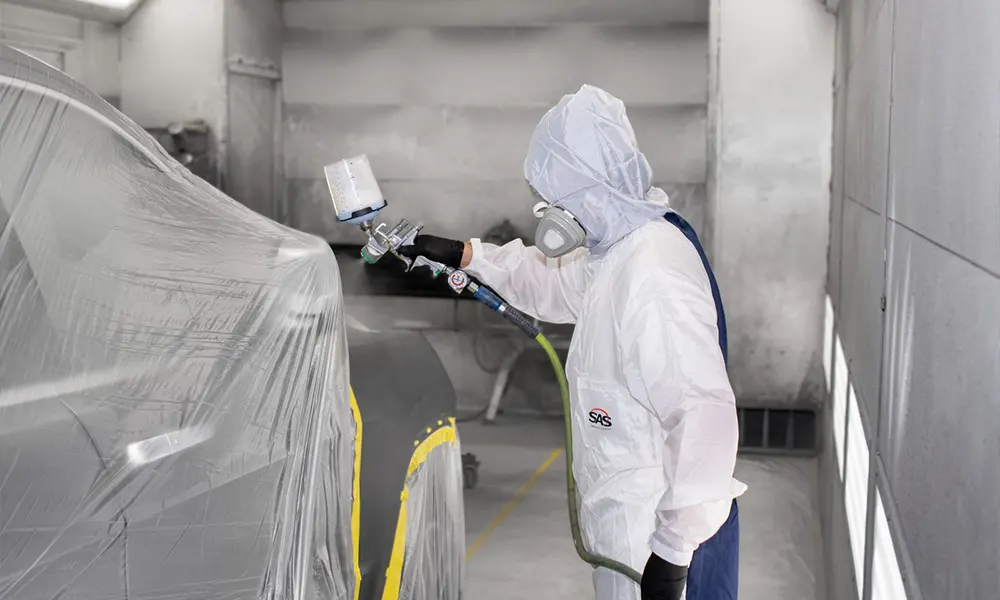
Application technique also plays a major role. Factors like spray pressure, gun angle, overlap pattern, flash times, and drying conditions all affect how the paint lays down and reflects light.
Automotive paint matching is not just about mixing the correct formula; it’s also about applying it correctly.
That’s one reason low-quality paint work often becomes obvious later, even if it initially looked acceptable.
Why Body Shops Blend Adjacent Panels
One of the most common customer questions is:
Why do body shops paint nearby panels if only one panel is damaged?
The answer is blending.
Blending allows technicians to gradually transition the new paint into the surrounding original paint. Without blending, there is often a visible line where the new paint meets the older finish.
This is especially important on metallic and pearl colors.
For example, if a repaired fender is painted without blending into the adjacent door, even a slight color difference can become obvious in sunlight.
Blending helps create a smoother, more factory-like appearance and prevents repaired areas from standing out.
Proper blending is not unnecessary upselling. It is part of quality automotive paint repair.
Technology Helps, But Experience Still Matters
Modern paint technology has improved dramatically over the years. Many paint and body shops now use digital color scanners and computerized mixing systems to analyze paint colors.
These tools are helpful, but they are not perfect.
Technology cannot fully account for:
- paint age
- fading
- environmental wear
- lighting conditions
- how the human eye perceives color
Experienced technicians still perform spray-out tests and evaluate colors in different lighting before applying paint to the vehicle.
That human judgment is often the difference between an average paint match and a repair that truly disappears.
Why Poor Auto Paint Matching Hurts Vehicle Value
Paint quality affects more than appearance.
Poor paint matching can reduce resale value, raise concerns during appraisals, and make previous repairs much more noticeable to buyers.
Common signs of poor auto body paint work include:
- Panels that look darker or lighter than the surrounding areas
- Visible blend lines
- Excessive texture differences
- Uneven metallic appearance
- Premature fading or clear coat failure
Even small mismatches become easier to spot over time as the vehicle continues aging.
High-quality automotive paint repair helps preserve:
- Appearance
- Long-term durability
- Resale value
- Overall confidence in the repair
What to Look for in a Paint and Auto Body Shop
Not every paint and body shop approaches paint matching the same way.
A quality shop should:
- Use OEM paint codes and professional refinishing systems
- Blend panels when necessary
- Evaluate paint in multiple lighting conditions
- Stand behind repairs with a warranty
- Explain the repair process clearly
Most importantly, they should prioritize doing the repair correctly instead of rushing the job to save time.
At Adesa Auto Body, we understand that proper paint matching is part science and part craftsmanship. From paint preparation and blending to final color evaluation, attention to detail matters at every stage of the process.
If your vehicle needs automotive paint repair, our team can help restore your finish with professional color matching and manufacturer-approved repair procedures. Whether you are dealing with collision damage, fading paint, scratches, or panel refinishing, we are here to help.
Stop by our Boise shop anytime for a free walk-in estimate. You can also call us at (208) 395-3135 or reach out online with any questions.
Learn more about our Automotive Paint Repair services today.